
The Serengeti is the reason most travelers come to Tanzania. The name comes from the Maasai language and means “endless plains”, and that is exactly what you see from the open roof of the jeep: golden grass, lone acacia trees and a horizon that never ends. This is where the Great Migration happens, and it has one of the highest concentrations of big predators in the world.
What you see in the Serengeti
- The Great Migration: more than a million wildebeest and hundreds of thousands of zebras moving in a yearly circle between the Serengeti and the Maasai Mara in Kenya.
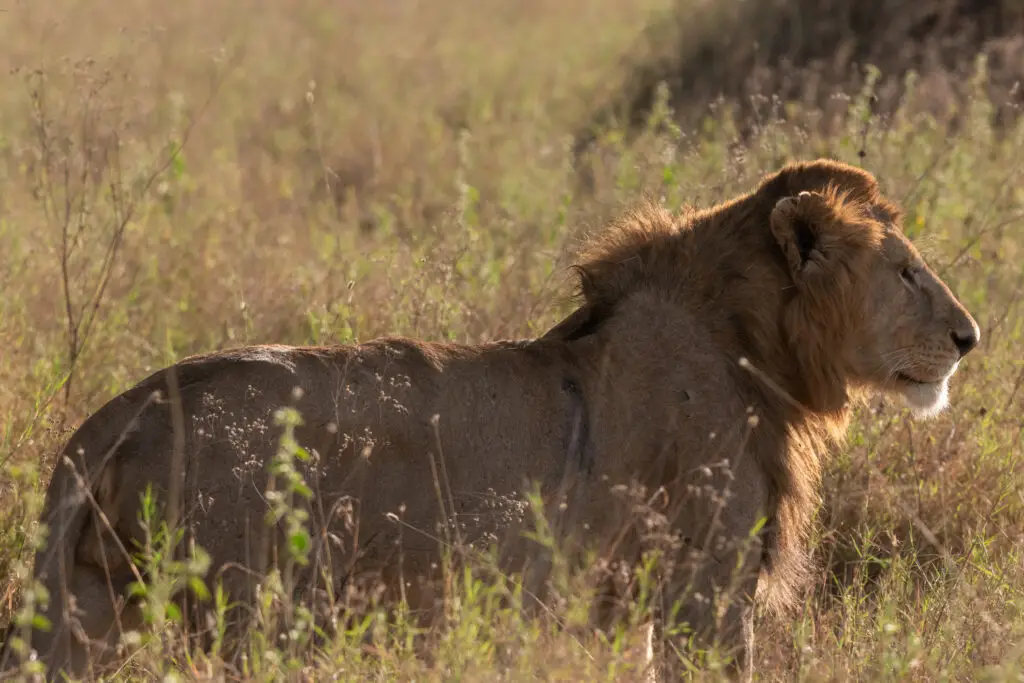
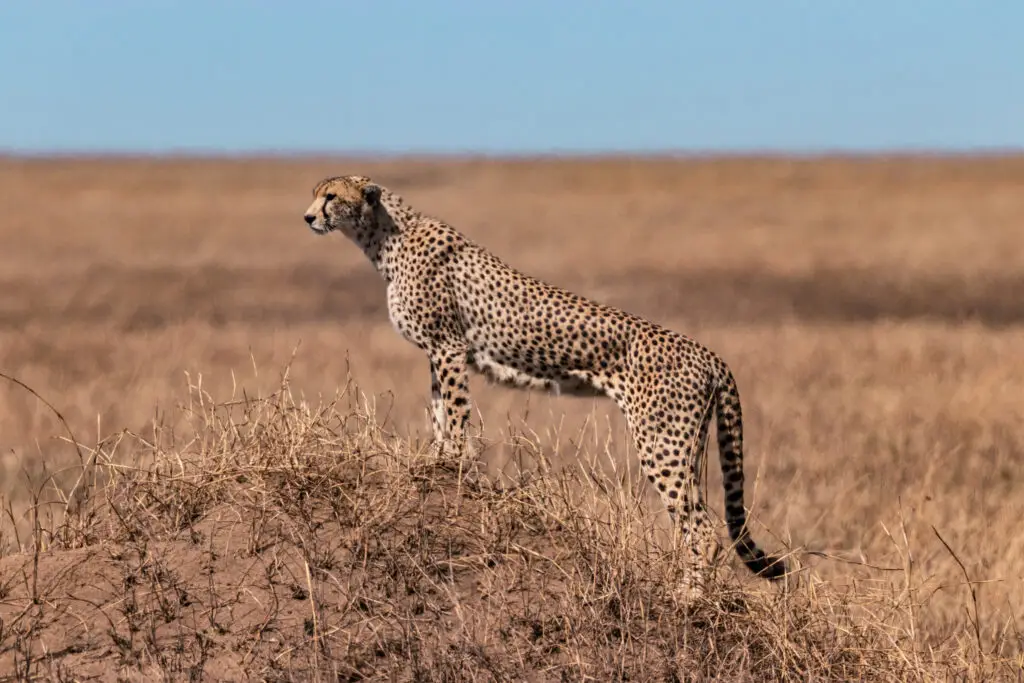
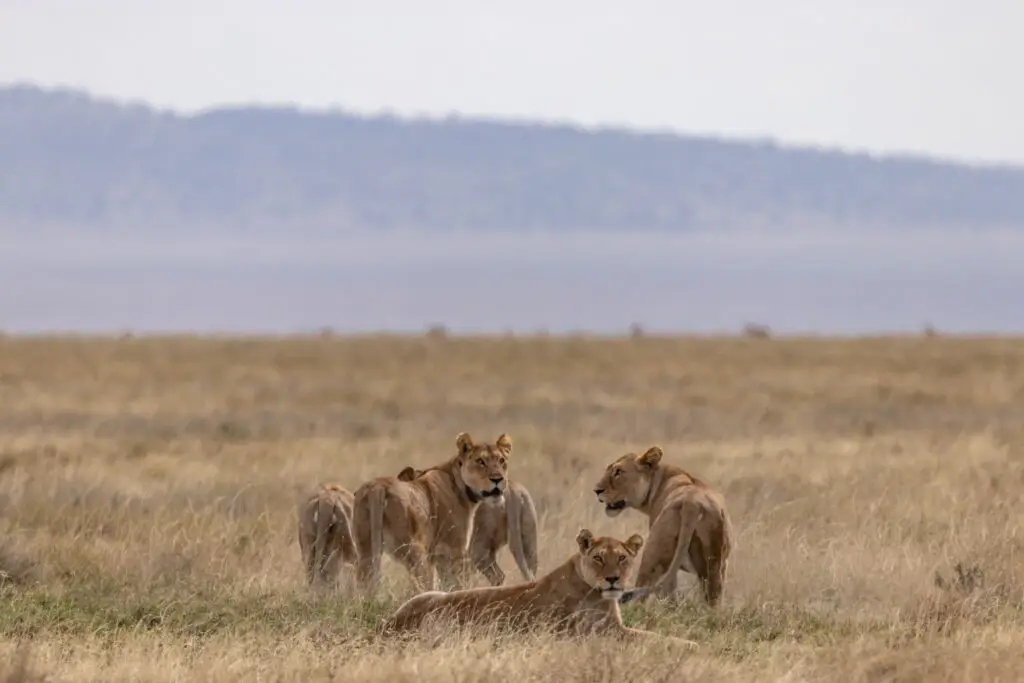
- Predators: lions, cheetahs, leopards and hyenas. In the central Serengeti the chance of meeting lions is very high.
- Kopjes: granite rock outcrops rising from the plain, with lionesses watching over the area from the top.
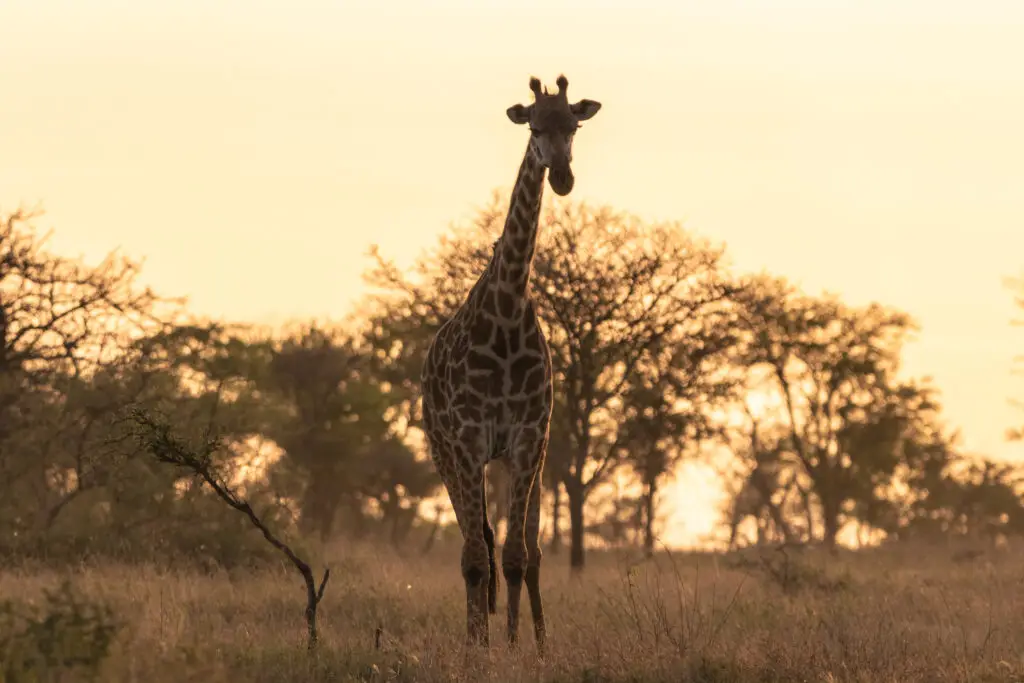
- And everything else: giraffes, elephants, hippos in the pools and hundreds of bird species.
Three areas, three experiences
Central Serengeti (Seronera): active all year, with rivers and permanent water that attract predators. This area is part of almost every route we run.
The south and Ndutu: roughly from December to March the herds are here, and between January and March they give birth. At the peak, thousands of calves are born every day and the predators are close. It is one of the most dramatic times of the year.
The north and the Mara River: roughly from July to October the herds cross the Mara River. Seeing a crossing takes patience and luck, but nobody who has seen one forgets it.
How many days for the Serengeti?
We recommend at least two nights inside the park. The drive in takes half a day, so every extra night adds a lot of game-viewing time. SAFARI EXPRESS includes one night in the central Serengeti, a short taste. SAFARI CLASSIC includes two nights and a full safari day, and SAFARI SIGNATURE adds a morning with the Hadzabe tribe at Lake Eyasi.
Tips from the field
- The best sightings are early in the morning and towards sunset, when the predators are active.
- A hot-air balloon flight at sunrise is an upgrade worth considering at least once in a lifetime.
- Nobody can guarantee a sighting of a specific animal. The guides are in contact with each other and share sightings, which greatly increases the chances.
How it fits into the trip
Most of our travelers reach the Serengeti via Tarangire and Ngorongoro, and finish with a few beach nights in Zanzibar. Contact us for sample routes and a price estimate for your dates.
